Hippie Flower: A Retro Display Font with Summer Soul
A Typeface That Feels Like a Sunny Afternoon
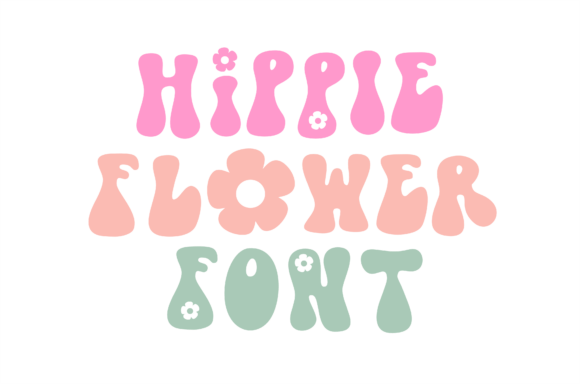
There’s a particular warmth to design that draws from the late 1960s and early 1970s. It’s a feeling of gentle rebellion, soft curves, and an organic connection to nature. The Hippie Flower typeface captures this essence perfectly. More than just a collection of letters, it’s a retro display font designed to evoke the carefree energy of a summer music festival or the peaceful vibe of a hand-painted protest sign. Each character is crafted with soft, wavy, rounded shapes, but the true magic lies in the details—tiny, cute daisies peeking through the counter spaces of letters like the 'O', 'D', and 'B'. It’s a font that doesn’t just spell words; it lets them bloom.
This isn't a typeface for dense paragraphs or legal documents. Its personality is playful, nostalgic, and inherently positive. The design language speaks directly to projects that need to feel handmade, authentic, and full of life. Think of it as a visual equivalent of a folk song or a vintage band poster—it immediately sets a mood. For designers and creators looking for a premium font with a strong point of view, Hippie Flower offers a distinct voice that’s hard to find in standard serif font or sans serif font libraries.
Where Hippie Flower Truly Shines: Practical Applications
Understanding a font's ideal use cases is key to successful typography. Hippie Flower is a quintessential display font, meaning its strength lies in headlines, logos, and short bursts of impactful text. Its intricate, decorative details would become a visual jumble at small sizes, but at scale, they transform into engaging textures.
In brand identity and logo design, this font can be the cornerstone for brands targeting a demographic that values authenticity, creativity, and a touch of retro charm. Imagine it for a local yoga studio, an organic skincare line, a vintage clothing boutique, or a craft brewery with a psychedelic edge. It communicates approachability and a connection to simpler, more expressive times. For packaging design, especially on products like artisanal foods, herbal teas, or handmade soaps, the font’s floral motifs can reinforce natural ingredients and a handcrafted ethos.
For editorial design and publishing, think beyond the body copy. Use Hippie Flower for chapter titles in a book about the counterculture, for pull quotes in a magazine feature on sustainable living, or for the cover of a zine. In the digital realm, it’s a powerhouse for social media graphics. A bold, flower-adorned headline for an Instagram post about a summer sale or a Facebook event for a community fair will stop the scroll with its joyful energy. It’s also ideal for web design hero sections or event landing pages where the goal is to create an immediate, emotive impact.
Working with a Display Font: Tips for Integration
Choosing a creative font like Hippie Flower is just the first step. Integrating it effectively requires a designer’s eye. Its strong personality means it rarely needs to fight for attention, but it does need the right supporting cast. The art of font pairing is crucial here. Because Hippie Flower is a detailed display typeface, it pairs best with clean, simple companions. A straightforward sans serif font for body copy or a minimal script font for subtitles can provide necessary breathing room and ensure overall readability. Avoid pairing it with other ornate handwritten fonts or busy serifs, which would create visual chaos.
Practical testing is non-negotiable. Before finalizing a brand identity or a large print run, test the font in context. Create mockups for a t-shirt, a sticker sheet, or a social media post to see how the floral counters interact with your color palette and background textures. Check the letter spacing (tracking) in your design software; sometimes, a little extra space can help the delicate details breathe. The font’s multiple file formats—OTF, SVG, PNG, EPS, and DXF—are a significant practical benefit. This ensures compatibility across professional design suites like Adobe Illustrator and Photoshop, as well as consumer-friendly platforms like Canva and cutting machines for crafters.
Finally, consider the licensing. As a commercial font, it’s built for professional use. Always review the specific license to ensure it covers your intended projects, whether for client work, merchandise, or digital products. The versatility of Hippie Flower as a design asset is clear, but respecting the creator’s terms ensures you can use its positive energy in your work without hesitation. It’s a tool designed to inject a dose of 60s-inspired joy into modern projects, bridging the gap between nostalgic appeal and contemporary modern typography needs.